
Chatroulette vs Omegle is one of the most important comparisons in the history of random online chat because both platforms shaped how people spoke to strangers on the internet. They made anonymous conversations feel fast, simple, and unpredictable.
Popular Alternatives:


At their peak, both platforms gave users a quick way to meet someone new without creating a detailed profile. A person could open the site, start a chat, and move to another stranger when the conversation ended. That simple idea became the foundation for many random video chat platforms that followed.
However, the two platforms were never identical. Chatroulette focused strongly on webcam-based random video chat, while Omegle became known for both anonymous text chat and video chat. That difference matters because each platform served a slightly different type of user.
Last Updated: May 2026
How This Chatroulette vs Omegle Review Was Evaluated
This review compares the two platforms based on how they worked, what made them popular, and why users still compare them today. Since Omegle no longer operates in its original form, it is discussed as a historical platform and not as a current option.
The comparison looks at:
- Ease of access
- Random video chat quality
- Text chat options
- Privacy and anonymity
- Safety concerns
- Moderation expectations
- Mobile and desktop usability
- Overall value for stranger conversations
The goal is simple: explain which platform suited which type of user and why the comparison still matters in the random chat space.
What Are Chatroulette and Omegle?
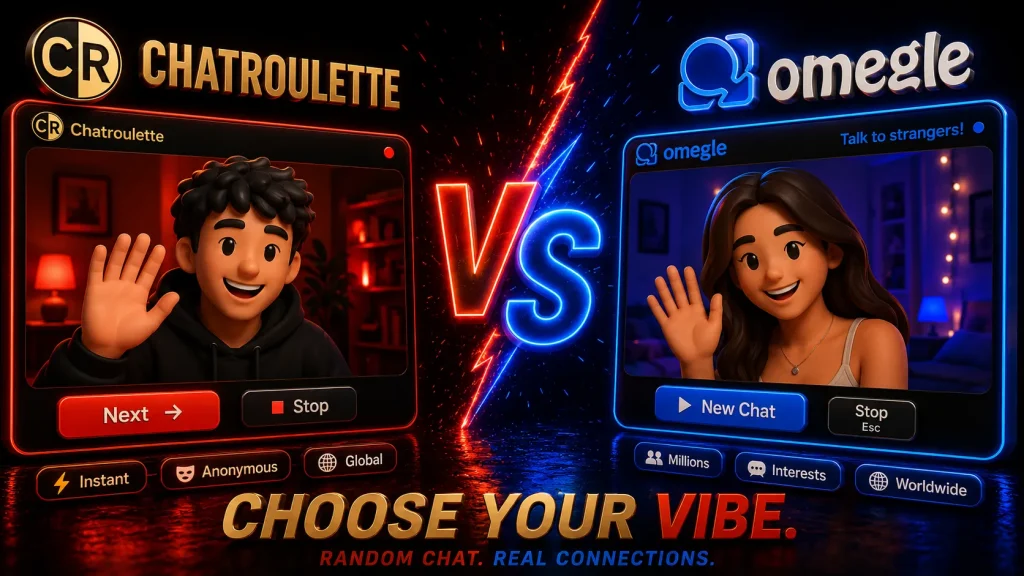
Chatroulette is a random video chat platform that connects users with strangers through live webcam conversations. Its main appeal has always been speed. A user enters, gets matched with another person, talks for a while, and then moves on.
Omegle was an anonymous stranger chat platform that became famous for both text and video conversations. It allowed people to talk without a profile, and it also offered interest-based matching during its active years.
That difference gave Omegle a wider feel. A user could type before showing their face, while Chatroulette pushed users more directly into live cam-to-cam interaction. Therefore, Chatroulette vs Omegle is really a comparison between webcam-first chatting and flexible anonymous chatting.
Why Users Still Compare These Platforms
Users still compare these platforms because they represent two different sides of the same online behavior. Both helped people chat with strangers, but they did it with different levels of exposure and control.
Chatroulette became the symbol of fast random webcam encounters. It felt visual, direct, and spontaneous. Omegle became the symbol of anonymous online conversation, especially for users who wanted to talk through text before trying video.
In addition, both platforms influenced later Omegle alternatives, random video chat sites, and stranger chat apps. Many newer services still copy the same basic formula: connect two strangers quickly and let them decide whether to continue.
How Chatroulette Worked
Chatroulette worked by randomly pairing users through video chat. The user would allow camera and microphone access, then the platform would connect them with another stranger.
If the conversation felt awkward, boring, or uncomfortable, the user could skip to someone else. This fast-switching system became one of the platform’s most recognizable features.
The experience was simple, but it was also unpredictable. One match could be funny and friendly. The next could be silent, rude, or inappropriate. That unpredictability became both the charm and the weakness of Chatroulette.
How Omegle Worked
Omegle worked by connecting strangers through anonymous text or video chat. Its text mode made it especially popular because users could start talking without showing their face.
The platform also allowed users to add interests. This helped match people around shared topics, although the quality of those matches could vary. Still, it gave Omegle a little more structure than a completely random cam-only platform.
Because of this flexibility, many users saw Omegle as easier to enter. It did not force everyone into video immediately. That made it more comfortable for casual conversations, especially for people who wanted privacy.
Chatroulette vs Omegle for Random Video Chat
Chatroulette had the stronger identity as a pure random video chat platform. It was built around webcam conversations, so users who wanted live visual interaction could get straight to that experience.
Omegle also offered video chat, but it was not only a video platform. Many users opened Omegle for text chat, interest-based conversations, or anonymous discussion. Video was important, but it was only one part of the platform.
For users who wanted immediate cam-to-cam chat, Chatroulette had the edge. For users who wanted more choice before turning on video, Omegle felt more flexible.
Chatroulette vs Omegle for Text Chat
Omegle clearly performed better for text chat. Its anonymous text mode was one of its biggest strengths, and many users preferred it because it felt less exposed.
Text chat allowed people to test a conversation before revealing anything personal. It also helped users avoid camera pressure. For casual chats, jokes, quick questions, or topic-based conversations, this made Omegle easier to use.
Chatroulette did not offer the same text-first identity. Its brand was built around webcam conversations. As a result, it suited users who were ready for video, not users who wanted a slower start.
Privacy and Anonymity
Privacy was one of the biggest reasons people used both platforms. Users liked the idea of talking to strangers without building a permanent social profile.
However, anonymity can be complicated. It can make people feel freer, but it can also encourage bad behavior. Some users act differently when they believe there are no real consequences.
Omegle offered more privacy through text chat because users could avoid showing their face. Chatroulette exposed more visual information because the platform centered on webcam use. Therefore, anyone using a video-first platform needed to think more carefully about what appeared on camera.
Safety and User Protection
Safety was a major issue for both platforms. Random chat can be fun, but it can also expose users to strangers who behave badly.
Omegle’s open and anonymous structure created risks. While many people used it for harmless conversations, the platform also became associated with inappropriate behavior, weak user control, and safety concerns.
Chatroulette faced similar problems because live webcam platforms can attract unpredictable users. When video is involved, uncomfortable moments can happen quickly. Therefore, strong moderation and easy reporting tools matter on any random video chat platform.
Which Platform Felt Easier to Use?
Both platforms were easy to use, but in different ways. Chatroulette felt simple because it focused on one main action: start video chat and move through strangers.
Omegle felt easy because users had more entry points. Someone could start with text, add interests, or use video when ready. That made the platform feel less intimidating for many users.
For complete beginners, Omegle often felt more comfortable. For people who wanted fast webcam interaction, Chatroulette felt more direct.
Which Platform Had Better Conversation Quality?
Conversation quality depended heavily on luck. Both platforms were random, so neither could guarantee a good interaction.
On Chatroulette, conversation quality depended on whether both users were willing to appear on camera and actually talk. Some chats could feel lively and human. Others could end instantly.
On Omegle, text chat often created more room for conversation. Users could discuss topics, ask questions, or use interests to find a better match. However, low-effort chats and spam could still ruin the experience.
Chatroulette vs Omegle for Mobile Users
Omegle had an advantage for mobile users because text chat is easier on a phone. Users did not always need strong lighting, a stable camera angle, or perfect microphone access.
Chatroulette worked better when the user had a reliable camera and internet connection. Since video was central to the experience, poor connection quality could quickly make chats frustrating.
For mobile browsing, Omegle’s text-first option made it more convenient. However, for users who wanted video and had a stable setup, Chatroulette still offered a straightforward experience.
Chatroulette vs Omegle for Desktop Users
On desktop, both platforms made more sense. A laptop or desktop computer usually offers a better screen, stronger webcam placement, and easier typing.
Chatroulette benefited from desktop use because webcam conversations feel more natural on a larger screen. Users could sit comfortably and move through video matches quickly.
Omegle also worked well on desktop because users could type faster, switch between text and video, and manage conversations with less friction. Overall, desktop users had a smoother experience on both platforms.
Free Access and Platform Expectations
Both platforms became popular because they were easy to access. Users did not need a complicated subscription, long onboarding process, or detailed profile.
However, free access comes with trade-offs. Platforms that allow quick anonymous entry often struggle with moderation, spam, and low-quality behavior.
That is why users should never judge a random chat platform only by whether it is free. A better experience also depends on safety tools, user control, moderation, and the ability to leave uncomfortable chats instantly.
Comparison Table: Chatroulette vs Omegle
| Platform | Best For | Free Version / Pricing | Main Strength | Key Limitation |
|---|---|---|---|---|
| Chatroulette | Users who want fast webcam-based random video chat | Access details may change, so users should verify current platform information | Simple, direct cam-to-cam stranger matching | Camera-first format can feel too exposed or unpredictable |
| Omegle | Users who preferred anonymous text chat, optional video, and interest-based conversations | The original platform no longer operates in its previous form | Flexible text and video chat experience during its active years | No longer a practical current option, and safety concerns shaped its reputation |
Which Platform Was Better for Casual Chat?
Omegle was better for casual chat because users could start with text. That made conversations feel less pressured.
A person could ask a question, talk about a topic, or leave quietly if the conversation did not work. This gave Omegle a softer entry point than a webcam-first platform.
Chatroulette was less casual in that sense because video started the experience immediately. Some users liked that directness, but others found it too intense.
Which Platform Was Better for Webcam Chat?
Chatroulette was better for webcam chat because its whole identity centered on live video. Users knew what to expect before entering.
The platform worked best for people who wanted face-to-face stranger conversations. It also made skipping fast and simple, which suited users who wanted quick matches.
Omegle’s video chat was popular too, but it shared attention with text chat. Therefore, Chatroulette had the clearer focus for users who wanted a pure random video chat experience.
Which Platform Was Better for Anonymous Text Chat?
Omegle was much stronger for anonymous text chat. This was one of the main reasons people used it for years.
Text chat gave users more control over what they revealed. They could talk without showing their face, voice, room, or background. That made it feel safer and more private.
Still, anonymous text chat was not risk-free. Users could still encounter harmful behavior, scams, personal questions, or uncomfortable conversations.
Which Platform Was More Flexible?
Omegle was more flexible because it gave users different ways to interact. They could use text chat, video chat, and interests.
This made the platform useful for different moods. Someone could have a serious conversation, a silly chat, or a quick anonymous exchange. That variety helped Omegle stand out.
Chatroulette was less flexible, but more focused. It did one thing clearly: random webcam chat. For some users, that simplicity was exactly the point.
Which Platform Had More Risk?
Both platforms carried risk because random chat involves strangers. However, the type of risk differed.
On Chatroulette, the main risk came from live video exposure. Users could see inappropriate behavior, reveal too much visually, or feel pressured during camera interactions.
On Omegle, the risk came from broad anonymous access. Text chat felt safer at first, but anonymity could still attract harmful users. Therefore, both platforms required caution.
Common Problems With Random Chat Platforms
Random chat platforms often struggle with consistency. One conversation can feel great, while the next can feel pointless or uncomfortable.
In addition, users may skip quickly, refuse to talk, or behave in ways that make the platform feel low-quality. This is not unique to Chatroulette or Omegle. It affects the wider stranger chat space.
Another problem is trust. Users rarely know who they are talking to. Because of that, privacy awareness matters more than excitement.
Safety Tips for Using Random Chat Platforms
Users should avoid sharing personal information with strangers. This includes full names, phone numbers, home addresses, school names, workplace details, passwords, and social media profiles.
In addition, users should be careful with webcams. A camera can reveal background details, family members, documents, uniforms, or location clues.
It is also smart to leave uncomfortable chats immediately. No one owes a stranger an explanation. If a conversation feels unsafe, ending it is the right move.
What Users Should Look for in Modern Alternatives
Modern random chat users should look for platforms with better controls. Useful features include reporting tools, clear rules, age guidance, privacy settings, and fast exit options.
A good platform should also make its main purpose clear. Some platforms focus on anonymous text chat. Others focus on random video chat, public chat rooms, or adult-friendly cam conversations.
Users should choose based on comfort level. Someone who wants text chat should not force themselves onto a webcam-first platform. Likewise, someone who wants live video should choose a service designed for that experience.
FAQs: Chatroulette vs Omegle
What is Chatroulette?
Chatroulette is a random video chat platform that connects users with strangers through webcam conversations. It became known for fast cam-to-cam matching.
What was Omegle?
Omegle was an anonymous chat platform that offered text and video conversations with strangers. It became one of the most famous names in random online chat.
Is Omegle still available?
The original Omegle platform no longer operates in its previous form. Users should treat it as a historical comparison point rather than a current option.
Which was better for video chat?
Chatroulette was better for users who wanted direct webcam-based stranger chat. Its main format focused strongly on live video.
Which was better for text chat?
Omegle was better for text chat because users could talk anonymously without turning on a camera.
Was Chatroulette safer than Omegle?
Neither platform could guarantee full safety. Both involved strangers, so users needed caution, privacy awareness, and quick exit habits.
Why did people use Omegle?
People used Omegle because it offered anonymous text chat, optional video chat, and simple access to random conversations.
Why did people use Chatroulette?
People used Chatroulette because it offered fast random video chat with strangers through a simple webcam-based format.
Which platform was better for privacy?
Omegle offered more privacy for users who stayed in text chat. However, anonymous chat still carried risks.
Which platform was more unpredictable?
Both platforms were unpredictable. However, Chatroulette often felt more immediate because users entered live video conversations quickly.
Did users need accounts?
Both platforms became popular because access was simple. However, users should always verify current access rules on any active platform.
Can random chat platforms be used safely?
They can be used more safely when users protect personal information, avoid risky camera exposure, and leave uncomfortable conversations quickly.
What should users avoid sharing?
Users should avoid sharing names, locations, contact details, financial information, private photos, passwords, or social media accounts.
What is the main difference between the two?
The main difference is format. Chatroulette focused on random video chat, while Omegle offered both anonymous text chat and video chat.
Who wins overall?
The winner depends on the user. Chatroulette suited webcam-first users, while Omegle suited people who wanted more flexible anonymous chat.
Final Verdict: Chatroulette vs Omegle
Chatroulette was best for users who wanted fast webcam-based random video chat. Its biggest strength was simplicity, but its biggest weakness was the intensity and unpredictability of camera-first conversations.
Omegle was best for users who wanted anonymous text chat, optional video, and more flexible stranger conversations. Its biggest strength was accessibility, but its biggest limitation was the safety and moderation concern that followed it for years.
Overall, Chatroulette vs Omegle is not a simple winner-takes-all comparison. Chatroulette had the stronger random video chat identity, while Omegle offered the better all-round anonymous chat experience during its active years. Users looking for similar platforms today should compare modern alternatives carefully, protect their privacy, and approach every stranger-chat experience with safety awareness.