
LGBTQ Chat Rooms are online spaces where lesbian, gay, bisexual, trans, queer, questioning, and other LGBTQ people can talk through public rooms, private messages, video chat, or stranger-chat platforms. These rooms can help people find conversations that feel more relevant than broad public chat spaces.
Popular Alternatives:



Some LGBTQ Chat Rooms focus on casual social talk. Others include adult-friendly topics, webcam features, private chat, or identity-focused rooms. The best fit depends on what a person wants: group conversation, quick stranger chat, private messaging, or live video.
However, a room label is not enough. A space can call itself LGBTQ-friendly and still have weak moderation, spam, or people who ignore boundaries. Because of that, users should choose carefully, protect personal details, and leave any room that feels unsafe.
Last Updated: May 2026
What These Rooms Offer
LGBTQ chat rooms give people a place to talk with others who may share similar identities, interests, or life experiences. This can make online conversation feel easier because the room already has a clear focus.
Some rooms are broad and social. They may include casual conversation, jokes, general life talk, and light introductions. Other rooms are more specific, such as gay chat, lesbian chat, trans chat, bi chat, queer rooms, or adult-focused spaces.
The format can also change. A platform may offer text rooms, private messages, voice chat, video chat, or cam-to-cam features. As a result, users should not assume every room works the same way.
A better experience usually comes from matching the room to the goal. Someone who wants calm group discussion may prefer a public room. Someone who wants live interaction may prefer video or anonymous video chat tools.
How This LGBTQ Chat Rooms Review Was Evaluated
This article looks at LGBTQ-focused chat spaces from a practical user point of view. The focus is on room quality, privacy, safety, and how different platforms fit different conversation styles.
The main points considered include:
- Public room activity and topic relevance
- Private messaging and user control
- Video chat or cam-to-cam options
- Blocking, reporting, and safety tools
- Mobile and desktop usability
- Adult boundaries and consent awareness
- Pricing clarity where paid features may apply
Platform rules, access, and pricing can change over time. Therefore, users should always check current details directly before signing up, entering adult rooms, or paying for any feature.
How LGBTQ Chat Rooms Work
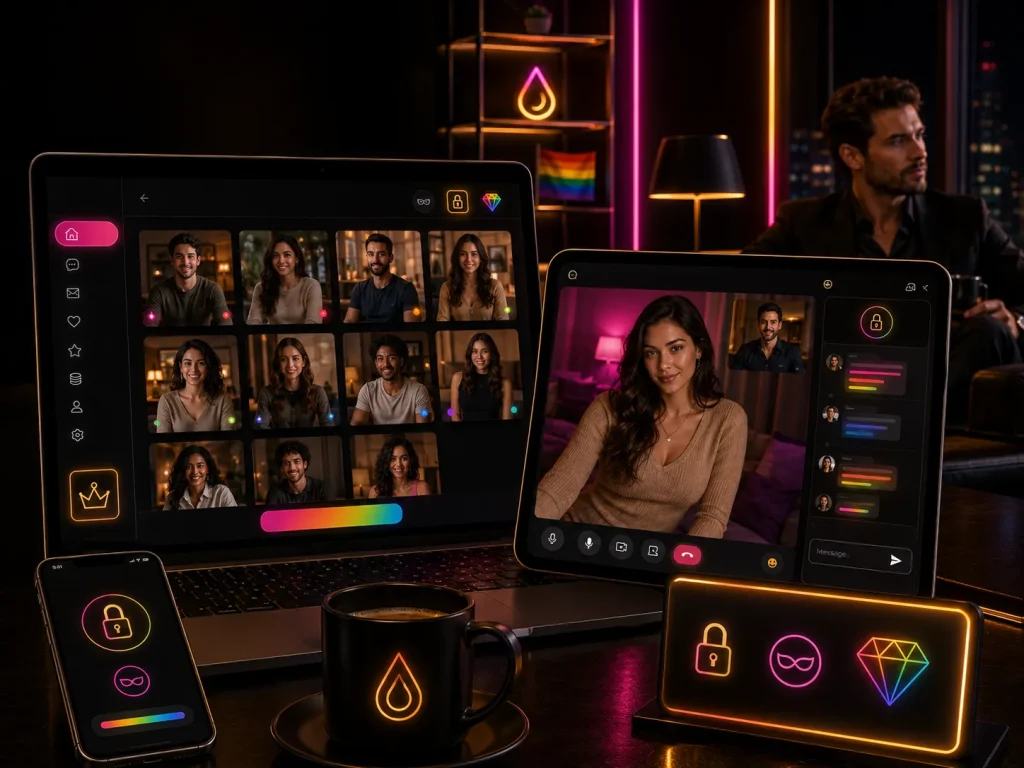
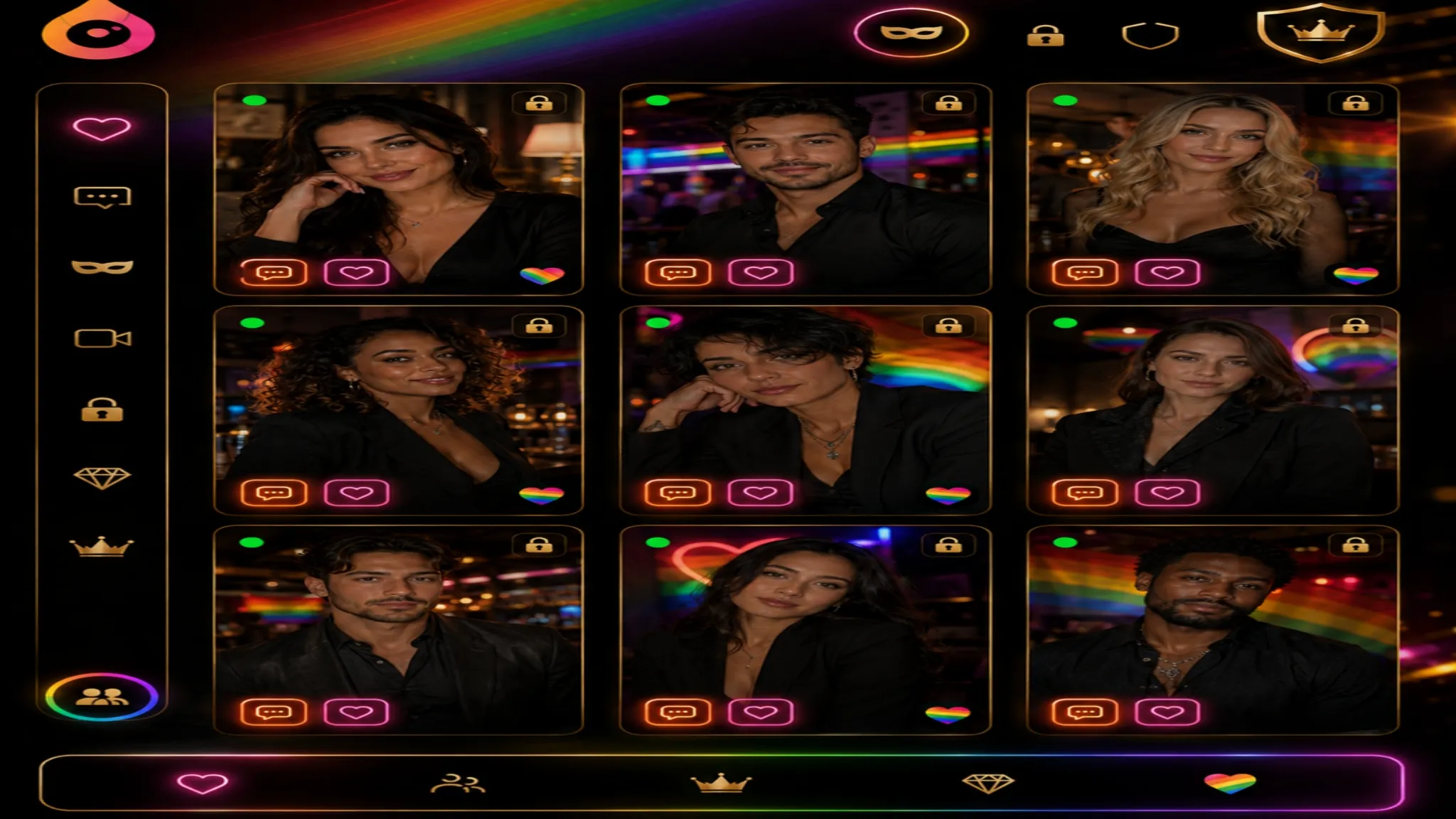
Most LGBTQ Chat Rooms follow a simple process. A user enters a platform, chooses a room, and joins the conversation. Some sites allow guest access, while others ask users to create an account first.
Public rooms work like group chats. Several people talk in the same space, and anyone in the room may reply. This format can feel lively when the room has active users and clear rules.
Private messages create a more direct exchange. They allow two people to talk away from the wider room. However, private messages also need stronger boundaries because strangers may ask personal questions too quickly.
Video chat feels more immediate. It can make a conversation feel more real, but it can also reveal personal details. For that reason, users should treat video as optional and use it only when comfortable.
Why People Use LGBTQ-Focused Rooms
People use LGBTQ Chat Rooms for many reasons. Some want casual conversation with people who understand queer topics. Others want adult-friendly rooms, private chat, or video interaction with strangers.
Relevance is a major reason. A broad public chat room may feel too random, while an LGBTQ-focused room can offer a clearer starting point. Users may not need to explain basic context before joining a conversation.
In addition, some people prefer chat rooms because they feel flexible. A person can join, talk for a short time, and leave without creating a long public profile.
Still, flexibility comes with risk. Open rooms can attract spam, fake profiles, rude users, or people who ignore consent. Therefore, users should balance curiosity with caution.
What Makes a Room Worth Joining
A good LGBTQ chat room should feel active, clear, and easy to control. Users should understand the room topic before they join.
Clear room labels help a lot. A platform should make it easy to see whether a room is for casual talk, adult chat, video chat, support-style discussion, or general social conversation.
Safety controls also matter. Block buttons, report tools, privacy settings, and easy exit options should be visible. If a user has to search too hard for these tools, the platform may not feel safe enough.
Room culture is just as important. Good spaces do not reduce people to labels. They allow users to talk as full people, not just as categories.
Public Rooms, Private Messages and Video
Public rooms work well for low-pressure conversation. A person can read the room first, understand the tone, and decide whether to join.
Private messages suit more focused conversations. They can feel calmer because there is no group noise. However, they also require more caution because direct chats can move quickly.
Video chat offers a stronger sense of presence. It may suit users who want live face-to-face interaction. Still, it can reveal a face, voice, room, documents, or location clues.
People who use video should check their background first. They should also avoid showing anything that could identify them. Even in LGBTQ Chat Rooms, privacy should stay under the user’s control.
Safety and Privacy Checks
Safety starts before the first message. A separate username can help protect personal identity. It keeps chat activity away from real-life accounts.
Users should avoid sharing full names, phone numbers, home addresses, workplace details, banking information, passwords, or private social profiles. These details can be misused, even if the conversation feels friendly at first.
Photos need extra care. A simple image can reveal background details, location signs, personal items, or identity clues. Private videos carry even more risk.
It also helps to keep early conversations on the platform. If something feels wrong, blocking or leaving is easier than dealing with someone on a personal app.
Consent and Boundaries
Consent matters in every LGBTQ chat space. A user should not pressure another person into private messages, webcam use, adult talk, or off-platform contact.
Boundaries should be respected the first time. If someone says no, changes the topic, stops replying, or leaves, that choice should be accepted without argument.
Users should also set their own limits before joining. They should know which topics feel fine, which details stay private, and when to leave.
This matters because online chat can move fast. A clear boundary makes it easier to stop a conversation before it becomes uncomfortable.
Free vs Paid Access
Many LGBTQ chat platforms offer free access. Free rooms can help users test the space before spending money.
However, free access may include limits. Some platforms may restrict private messages, video tools, filters, room access, or longer sessions. Others may show more ads or have more spam.
Paid tools can improve convenience, but payment does not guarantee better people or better safety. A platform should explain what users get before asking for money.
A simple approach works best. Test free access first, read the rules, and only pay when the value is clear.
Best Room Types for Different Users
The best room type depends on what the user wants. Public rooms suit people who want group conversation. Private chat suits people who prefer one-on-one messages.
Video rooms work for users who want live interaction. However, video requires more privacy care. Text rooms may feel better for people who prefer control and slower conversation.
Identity-focused rooms can also help. A person may prefer gay rooms, lesbian rooms, trans rooms, queer rooms, or bi chat rooms because the topic feels more relevant.
Adult rooms are different. They may include mature talk, private messages, or webcam features. Users should enter those spaces with clear boundaries and age-appropriate expectations.
Comparison Table: LGBTQ Chat Rooms
| Platform | Best For | Free Version / Pricing | Main Strength | Key Limitation |
|---|---|---|---|---|
| Gayconnect | Queer-focused discovery where identity shapes the room experience | Access and features may vary | More specific than broad public chat spaces | May not cover every LGBTQ conversation type |
| Gydoo | Direct gay chat or video interaction with a faster pace | Access and pricing may vary | Focused angle for gay chat discovery | Traffic and features may differ by region |
| GayPage | Mature LGBTQ browsing with an adult-friendly tone | Current access details should be checked directly | Stronger adult identity angle than general rooms | May feel too narrow for casual social chat |
| Pink Video Chat | Women-focused video spaces and visual chat discovery | Access and pricing may vary | Better fit for women-focused video interaction | Room quality and availability can vary |
| FreeChatNow | Mature room-based conversations across adult topics | Free access may be available; users should verify details | Broad adult room structure | Topic quality depends on timing and users |
| Chat Avenue | Large public-room browsing across many interests | Usually offers free access, but details may change | Wide room variety and easy navigation | Some rooms may feel crowded or uneven |
| Wireclub | Community-style chat where users can return to ongoing rooms | Free access may be available with optional features | Strong public-room feel | LGBTQ relevance depends on room choice |
| Y99 | Quick public chat for people who want simple room access | Free access may be available; details can change | Low-friction entry into open rooms | Safety and moderation can feel inconsistent |
| Chatib | Lightweight text chat without a heavy interface | Free access may be available; rules should be checked | Simple layout for casual conversation | Fewer advanced tools than richer platforms |
| Flingster | Fast cam-to-cam matching with an adult-friendly style | Free access may be available with paid upgrades | Quick one-on-one video discovery | Adult tone may not suit every visitor |
| Shagle | Broad stranger video chat with filter-style controls | Free access may be available with paid features | Wide matching pool and quick video access | Some controls may require upgrades |
| Emerald Chat | Cleaner stranger-chat experience with a modern feel | Free access may be available with optional features | More polished than many random chat platforms | Some features may be limited |
| Instacams | Quick stranger-chat access for adults testing live online conversation | Access may vary by region, offer, or campaign | Simple entry point for meeting people online | Experience depends on traffic quality and offer availability |
How to Choose the Right Platform
Choosing between LGBTQ Chat Rooms starts with format. A person who wants group conversation should look for public rooms. A person who wants live interaction should look for video or cam-to-cam features.
Next, users should check privacy tools. Blocking, reporting, muting, and leaving should feel simple. If those controls are hard to find, the room may not offer enough control.
Room culture also matters. Some spaces feel warm and active. Others feel spammy, aggressive, or poorly managed.
A room should not only match identity. It should also feel safe, useful, and easy to leave.
Common Problems to Watch For
LGBTQ chat rooms can be helpful, but they are not perfect. Some rooms may have low activity, fake profiles, spam, or rude users.
Poor moderation is another issue. Even if a platform has rules, it may not catch every bad message quickly. Because of that, users should not depend only on the platform.
Some people may also pretend to be someone else. This happens across many stranger-chat spaces. Therefore, users should avoid trusting strangers too quickly.
Finally, some platforms may push paid features too early. Clear pricing matters because confusion can make the whole experience feel less trustworthy.
No-Registration Chat Rooms
No-registration rooms can feel convenient. A user can enter quickly without creating a full profile.
However, easy entry can attract poor behavior. When people join with little accountability, spam and harassment can appear more often.
Some platforms offer limited guest access first. Then they require an account for private messages, filters, or longer sessions. This can balance speed with control.
Fast access is useful, but it should not replace safety. Users should still check room rules, privacy settings, and block tools.
Identity-Focused Spaces
Identity-focused spaces can help users find more relevant conversations. These may include gay rooms, lesbian rooms, trans rooms, queer rooms, or broader LGBTQ spaces.
These rooms can feel more comfortable because users may not need to explain basic context. The room already gives the conversation a clearer direction.
However, identity-based rooms still need respect. No person should be treated like a label, fantasy, or category.
People looking for LGBTQ-friendly chat rooms should pay attention to tone. A good room lets users talk openly without pressure or disrespect.
Adult LGBTQ Chat Rooms
Some rooms are adult-friendly. These spaces may include mature conversation, private messages, webcam tools, or flirtier topics.
Adult rooms require extra care. Users should know what they are comfortable discussing before entering. They should also leave quickly if another person ignores consent.
People searching for free gay chat or similar adult-friendly rooms should still look for safety features. A free room can be useful, but it should not feel uncontrolled.
Adult conversation works best when both sides show respect. If the tone becomes pushy or invasive, ending the chat is the right move.
Webcam and Cam-to-Cam Rooms
Webcam tools can make online chat feel more direct. A live camera can turn a basic message into a more personal conversation.
However, video also raises privacy risk. A camera may show a face, room, document, window, or personal item. Users should check the background before going live.
Some people may prefer trans video chat or other identity-focused video spaces because they want a more relevant experience. Others may prefer text because it feels safer.
Both choices are valid. The important thing is control. A user should decide when video starts and when it stops.
Random Chat for LGBTQ Users
Random chat can feel exciting because it connects people quickly. Instead of choosing a room, users may get matched with strangers in real time.
This format can be fun, but it can also feel unpredictable. One match may be respectful, while the next may be rude or unsafe.
People using random adult video chat platforms should keep exit tools close. Leaving quickly is not rude when a match feels uncomfortable.
Speed should never matter more than safety. A fast chat only works well when users can control the interaction.
How to Stay Safer Before Joining
Before joining LGBTQ Chat Rooms, users should create a separate username. This keeps real-life identity away from casual online conversations.
They should also avoid moving to private apps too soon. A chat platform may offer blocking and reporting tools, while private apps can expose more personal details.
It helps to start with public rooms. A person can watch the tone before joining private messages.
Most importantly, users should trust discomfort. If a conversation feels strange, pushy, or manipulative, leaving is enough.
What Not to Share
Users should not share passwords, banking details, verification codes, home addresses, workplace information, or private documents in LGBTQ Chat Rooms.
Photos need caution too. A picture can reveal a location sign, personal object, background detail, or identity clue.
Private videos carry even more risk. Once a video leaves a user’s control, it may be hard to remove.
Less sharing is often safer. A good conversation does not need personal exposure to feel real.
Signs a Room Is Not Worth Staying In
Some warning signs appear fast. A room may be full of spam, repeated messages, rude comments, or fake-looking profiles.
Pressure is another concern. If people push for payment, private images, off-platform contact, or personal details, users should slow down.
Weak safety tools also matter. A platform that hides block or report options gives users less control.
A good LGBTQ room should feel active but not reckless. It should give people freedom without making them feel exposed.
Safety Tips Before Chatting With Strangers
A few simple habits can make online chat safer. Users should start with a separate username and avoid linking personal social accounts.
They should keep early conversations on the platform. This makes it easier to block, report, or leave when needed.
It also helps to use text first. Video can come later if both people feel comfortable.
Finally, leaving is always allowed. A stranger online does not need a long explanation.
FAQs: LGBTQ Chat Rooms
What are LGBTQ Chat Rooms?
LGBTQ Chat Rooms are online spaces where lesbian, gay, bisexual, trans, queer, questioning, and other LGBTQ users can talk through public rooms, private messages, or video chat.
Are LGBTQ Chat Rooms only for adults?
Some rooms are general, while others are adult-focused. Users should always follow platform rules and choose age-appropriate spaces.
Are LGBTQ chat rooms safe?
They can be safer when users choose better platforms and protect personal details. However, no stranger-chat platform is completely risk-free.
Do these rooms require registration?
Some platforms allow guest access. Others require an account for private messages, video tools, filters, or adult sections.
Can people stay anonymous in LGBTQ rooms?
Some platforms allow low-profile chatting. Still, users should avoid sharing names, addresses, phone numbers, and personal social accounts.
Do LGBTQ chat rooms include video chat?
Some platforms include video features, while others focus on text rooms. Users should choose the format that feels comfortable.
What should users avoid sharing in LGBTQ rooms?
Users should avoid passwords, banking details, home addresses, workplace information, private photos, verification codes, and personal documents.
Is Instacams an option for LGBTQ chat rooms?
Instacams may suit adults testing quick stranger-chat access, depending on region, offer availability, and traffic quality. Users should verify current details directly.
What is the difference between public rooms and private chat?
Public rooms involve group conversations. Private chat allows one-on-one messaging, which can feel more focused but needs stronger boundaries.
Are LGBTQ-friendly rooms better than general rooms?
They may feel more relevant because the conversation can be more specific. However, users should still check room rules, safety tools, and culture.
Can people meet real users in LGBTQ chat rooms?
Yes, people may meet real users. However, they may also find bots, fake profiles, or low-quality conversations.
What is the safest way to use LGBTQ rooms?
The safest approach is to use a separate username, avoid oversharing, keep early chats on-platform, block aggressive users, and leave unsafe rooms quickly.
Should users pay for LGBTQ chat platforms?
Users should test free access first where possible. Paid features may help, but only when the platform clearly explains what payment includes.
Are no-registration LGBTQ rooms better?
They can be convenient, but they may also attract spam or poor behavior. Users should still check for blocking, reporting, and clear room rules.
Are adult LGBTQ chat rooms the same as live cam sites?
Not always. Adult LGBTQ rooms focus more on conversation, while live cam sites may focus more on visual entertainment or paid interactions.
Final Verdict: LGBTQ Chat Rooms
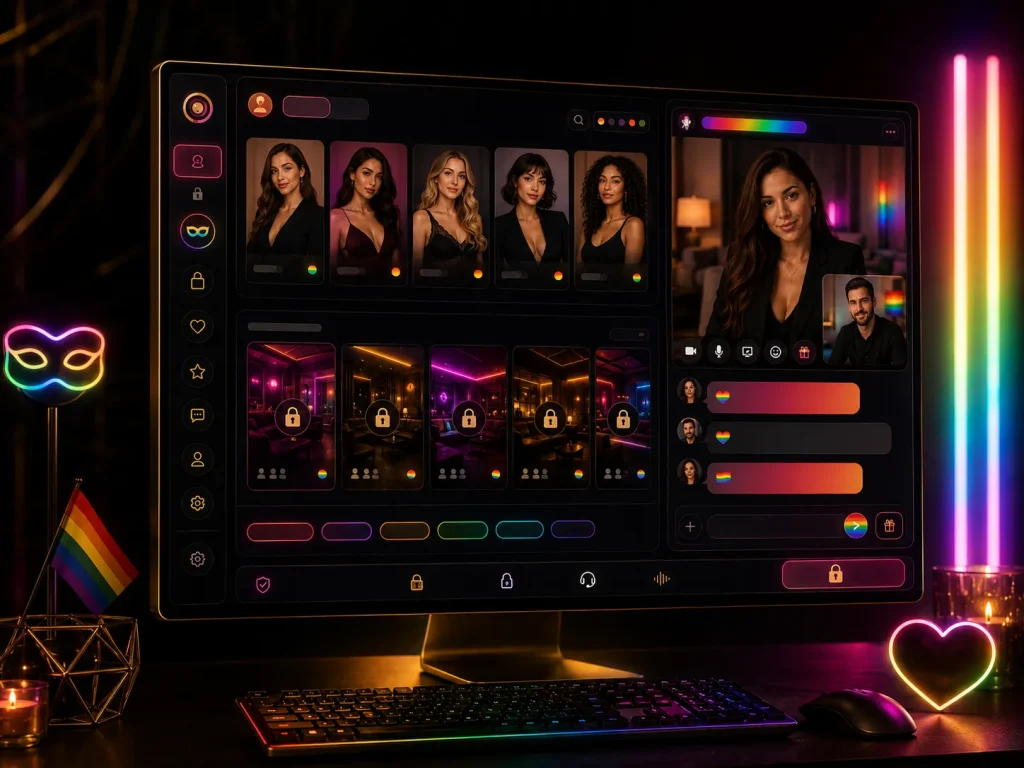
LGBTQ-focused rooms can help people find public conversations, private messages, video interaction, and identity-aware spaces that feel more relevant than broad stranger-chat rooms. Their main strengths are flexibility, shared context, and quick access to people with similar interests.
However, these rooms also have limits. Some spaces may feel respectful and active, while others may include spam, fake profiles, weak moderation, or users who ignore boundaries.
Room-based platforms may suit people who want group conversation. Video platforms may work better for those who want live visual interaction. Random chat platforms may appeal to users who prefer quick one-on-one matches.
The best approach is to compare platforms, start slowly, protect private details, and leave any conversation that feels unsafe. With the right habits, LGBTQ Chat Rooms can be useful, but users should always treat LGBTQ Chat Rooms with privacy, consent, and safety awareness.